


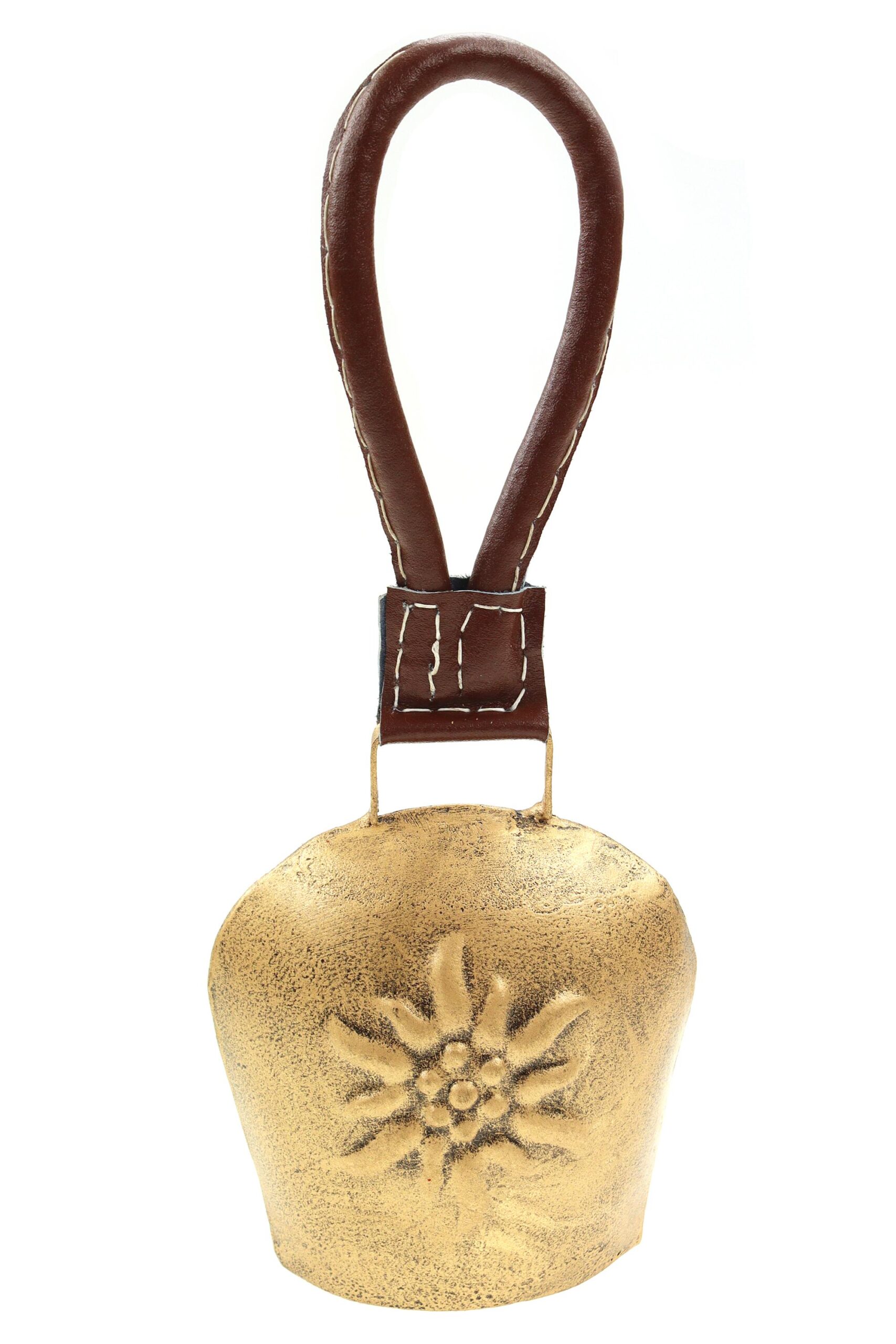
Metal Cow Bell gold 4.3inch
Classic brass cow bell with embossed Edelweiss design and genuine stitched leather strap. A timeless alpine piece with rustic charm, perfect for wall décor or chalet-style interiors.
Size: approx. 11 cm / 4.3 inch
Inventory Stock Status
In Stock with quantity: Products are readily available in our warehouse and will be shipped within 1–3 business days.
In stock without quantity: This item can be ordered and will ship directly from the manufacturer. As most of our products are crafted in Germany, delivery may take up to 6 weeks or longer. Dropship items.
Available on backorder: Temporarily out of stock, but you can still place an order for future delivery. For a precise arrival date, please reach out to us.
Out of Stock: This item is currently unavailable. If you’re interested, feel free to inquire via email for further assistance.
Contact MarketPlace24 via email: info@marketplace24.ca
Additional information
| Weight | 0.2 kg |
|---|---|
| Dimensions | 21 × 12 × 12 cm |
Related products
-

Window Hanging Angel white
Are you already registered as a wholesale customer? Please sign in.If not, we kindly ask you to register as a wholesale customer first. Thank you. -

Window Hanging Witch small
Are you already registered as a wholesale customer? Please sign in.If not, we kindly ask you to register as a wholesale customer first. Thank you. -

Window Hanging Advent Wreath
Are you already registered as a wholesale customer? Please sign in.If not, we kindly ask you to register as a wholesale customer first. Thank you. -

Window Hanging Alpine Winter
Are you already registered as a wholesale customer? Please sign in.If not, we kindly ask you to register as a wholesale customer first. Thank you. -

Window Hanging Nativity Scene
Are you already registered as a wholesale customer? Please sign in.If not, we kindly ask you to register as a wholesale customer first. Thank you. -

Window Hanging Winter Village
Are you already registered as a wholesale customer? Please sign in.If not, we kindly ask you to register as a wholesale customer first. Thank you.
Reviews
There are no reviews yet.